


Thank you for Subscribing to Med Tech Business Review Weekly Brief
MedTech Business Review: Specials Magazine
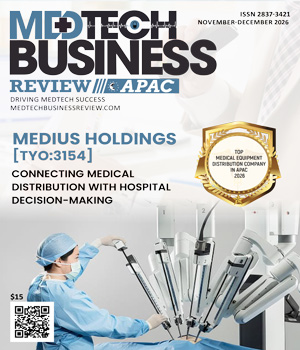
Connecting Medical Distribution with Hospital Decision-Making A hospital purchasing department may receive competitive quotations for the same medical material, but choosing the right product involves more than comparing prices. The department must understand how frequently the item is used, whether an alternative can meet the same clinical requirements and how the purchasing decision will affect inventory across the hospital. Once the order is placed, the material must reach the department where it is needed without adding unnecessary work for clinical staff. MEDIUS Holdings [TYO:3154] has built its medical equipment distribution business around these interconnected decisions. Operating through group companies across Japan, it supplies medical devices and materials while providing information and logistics services that help hospitals manage their supplies. Beyond delivering products, the company supports hospitals with purchasing decisions, inventory management and the preparation of medical supplies for clinical procedures. The company handles more than one million medical equipment and supply items, from everyday consumables to advanced surgical systems. Its distribution capabilities are supported by proprietary information tools and specialized hospital management services that help healthcare institutions choose suitable products, control inventory and manage supplies more effectively.
Medical Device Consulting
Caution in medical-device compliance can quietly harden into bureaucracy. Another procedure is added. Responsibilities are restated, explanations accumulate and documents are reviewed simply because the system has always operated that way. Eventually, the quality system meant to support the business becomes a second operation that the business must support. ORA innovations starts from the opposite premise. “The quality management system must serve the company, not otherwise,” says Kevin Badin, founder and director. ORA innovations takes a different view of what good regulatory work should accomplish. The goal is not to produce the most documentation, but to understand the device, its risk classification and what its intended market demands. Kevin has seen companies maintain 45 to 50 standard operating procedures. By comparison, he says ORA has generally not needed more than roughly 18 to 20 SOPs in the quality systems it has helped implement. The smaller number does not mean lighter compliance. It reflects sharper judgment about what is required, what is useful and what merely consumes attention. ORA innovations helps clients distinguish legal obligations from the standards that support them, identify the provisions that genuinely apply and translate those requirements into processes employees can follow in daily work. More than 30 years of experience spanning manufacturing, quality and regulatory affairs, including 23 years under ORA innovations, gives the consultancy the perspective to make those distinctions. ORA team puts that experience into practice by mapping the path from proof of concept through design, prototyping, manufacturing, market entry and post-market obligations. A startup may need help establishing an ISO 13485-aligned quality management system and navigating its first regulatory clearance. An established manufacturer may need auditing, training, documentation review or improvements to an existing framework. ORA has worked with organizations ranging from two- to five-person teams to companies with 2,000 to 3,000 employees..

Orthopaedic Products Development

Orthopaedic fixation is a balancing act between strength and adaptability. Surgeons need implants that hold firm in fragile or compromised bone, but also recognize that the long-term clinical journey is unpredictable. Fractures can recur, infections develop or adjacent pathology emerge—sometimes years later—requiring the implant to be removed. For expandable screws, this has historically presented a challenge: while they improve fixation strength, their removability is often poor, with some designs risking bone ingrowth or mechanical failure on extraction. REX Ortho’s Removable and Expandable (REX) Screw changes that The REX Screw provides significantly improved fixation strength through an internal wing expansion mechanism that deploys within the cancellous bone—particularly effective in osteoporotic or unstable fractures. This expansion distributes load over a larger bone volume, reducing the risk of the screw pulling out of the bone under physiological loading. Yet critically, unlike other expandable screw technologies, the REX Screw has been engineered for controlled, clean removal. Its unique “gapless” design prevents bone ingrowth into the mechanism and the wings retract along the same axis they deploy, enabling low-torque, low-trauma extraction. This design decision was driven by direct surgeon input. While many expandable screws achieve better fixation, their poor removability has limited adoption—particularly in trauma cases where revision may be needed. REX Ortho understood that performance isn’t just about holding. It’s about preparing for what comes next. “We listened to what surgeons needed and designed our product around it. The REX Screw delivers robust fixation without locking surgeons into a permanent solution,” says Ian Brown, co-founder. “It expands when increased fixation strength is needed, but it can be removed cleanly if conditions change, offering confidence not just in the moment of fixation but also if revision is ever needed, aligning with real-world clinical needs. And because it fits into the existing procedure without adding time or requiring new training, it brings assurance without disruption.” That philosophy—make it strong, but make it simple—runs through everything REX Ortho brings to the table. It has developed a platform of implants based on the same removable-expandable core technology, each tailored to a different clinical challenge. The F-REX Screw is built for hip fractures, where poor bone quality can lead to screws penetrating through the hip joint under walking loads, requiring the patient to have a total hip replacement surgery. The L-REX Screw, used in lumbar spine fusion, offers the same expansion technology in spinal applications, where stability is critical to prevent pain. And it’s not just theory—testing shows REX’s expandable hip screws deliver around five times more gait cycles to failure than traditional screws. A three-month animal study showed that the screw’s expandable wings could be cleanly retracted even after bone growth—evidence that its removability holds up under realistic conditions.
Medical Device Consulting

Leading Healthcare Innovation While Preserving the Human Connection
Zetch Cruz-Ram MD FPCOM, Medical Director (PH), Doctor Anywhere Philippines
Medical Suppliers and Distributors

Three Decades of Engineering Leadership from Development to Launch
Mark Hickson, Director, Research & Development, Leica Biosystems
Medical Device Consulting
Aligning Dynamic Engineering Projects with Long-Term Business Strategy
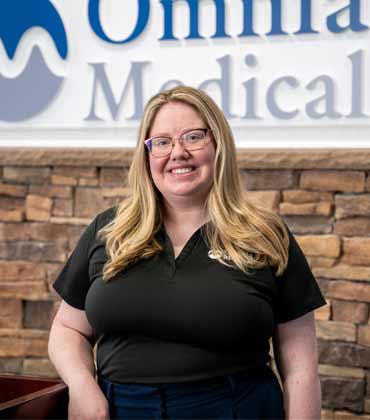
Abigail Mann, Director Of Engineering and Strategic Systems, Omnia Medical
IN MY OPINION
Medical Device Outsourcing
A Journey in Aesthetic Innovation
Gareth Pepper, Director of Animal Wellness - North America, BTL Industries

LAST WORD
Medical Device Manufacturing
Compliance in the Medtech Industry
Tomoko Chantelle Kondo, Head of Legal & Compliance, Arthrex
IN FOCUS
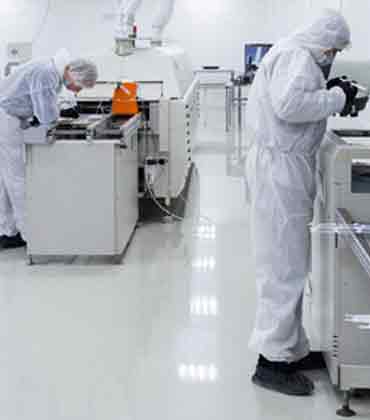
Medical Device Regulatory Services Are Strengthening APAC Market Access
Regulatory services help medical device businesses navigate APAC requirements, improve market access, and maintain efficient lifecycle compliance.

Electric Medical Beds in APAC: Advancing Flexible Patient Care
Electric medical beds improve patient positioning, enhance patient comfort and support patient mobility.
EDITORIAL
Balancing Innovation, Compliance and Care in MedTech
Effective healthcare delivery depends on more than the devices themselves. It requires dependable distribution, practical quality systems, and regulatory frameworks that support innovation while protecting patients. As medical technologies become more sophisticated, the organizations that connect manufacturers, healthcare institutions, and clinical professionals must meet these demands without losing sight of the people who use their products and services.
This edition of MedTech Business Review focuses on how companies across the medical technology ecosystem are aligning operational discipline with the demands of modern healthcare delivery.
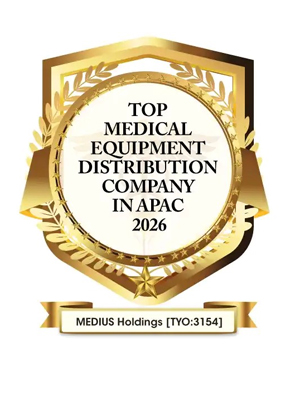
The cover story features MEDIUS Holdings, recognized as the Top Medical Equipment Distribution Company in APAC 2026. The profile examines how its distribution network, purchasing analysis, and hospital management services connect medical supply decisions with day-to-day clinical operations.
ORA Innovations, named Top Medical Devices Consultancy Services for Quality & Regulatory Affairs in APAC 2026, offers a complementary perspective. Its approach shows how streamlined, risk-based quality systems can meet regulatory requirements while remaining practical for businesses.
The leadership perspectives explore two further dimensions of the industry. Gareth Pepper, Director of Animal Wellness - North America at BTL Industries, examines the role of clinical evidence, regulatory compliance, and AI-driven innovation in non-invasive aesthetics, alongside the importance of patient safety when evaluating medical devices. Tomoko Chantelle Kondo, Head of Legal & Compliance at Arthrex, considers why MedTech compliance requires clear boundaries between commercial activity, public responsibilities, and the drive to develop better products.
Together, these perspectives reflect an industry in which innovation must work alongside accountability, and where product quality depends on the systems that support its development, distribution, and use.
Explore the edition further to discover how MedTech organizations are strengthening compliance, improving hospital operations, and advancing innovation while keeping patient needs at the center.
