


Thank you for Subscribing to Med Tech Business Review Weekly Brief
MedTech Business Review: Specials Magazine
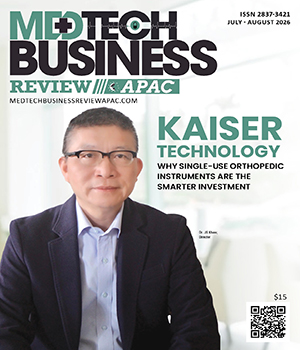
Conventional wisdom says reusable orthopedic instruments are the economical choice. But in practice, the math rarely holds. Reusables come with a string of hidden costs—reprocessing, sterilization, maintenance, repairs and scheduling inefficiencies that ripple through the OR. Each instrument cycle adds risk, complexity and costly downtime. Kaiser Technology offers a smarter alternative. Its single-use orthopedic instruments arrive pre-sterilized with ethylene oxide (ETO), eliminating the reprocessing burden entirely. No backlogs, no last-minute failures—just ready-to-use tools that ensure surgical teams stay on schedule and operating rooms (OR) keep moving. By replacing unpredictable, behind-the-scenes costs with a fixed per-case pricing model, Kaiser helps hospitals sidestep capital investments in sterilization infrastructure while easing the workload on sterile processing departments. The impact is immediate: fewer delays, faster room turnover, more procedures completed per day and a lower total cost per case. “It’s not just a product shift. It’s a procedural upgrade. One that’s cost-effective and strategically aligned with what modern surgical centers need most: speed, reliability and the ability to do more with less,” says Kenny Wang, managing director. At the heart of it lies a clear objective—to simplify the surgical experience for surgeons through intuitive, ready-to-use designs. That starts with understanding the realities of the OR. Kaiser doesn’t design from the sidelines. It works closely with distributor partners in the UK and the U.S. to understand the surgeon’s requirements in high-stakes environments. What does a secure grip feel like in hour three? Where does strain show up during complex cases? Every answer becomes input for design. The result is a line of single-use instruments engineered with thoughtful ergonomics—carefully distributed weight, grip profiles that reduce wrist strain and tactile control that stays reliable from start to finish. This design respects the surgeon’s endurance and sharpens their precision.
Point of Care Ultrasound Solution in APAC
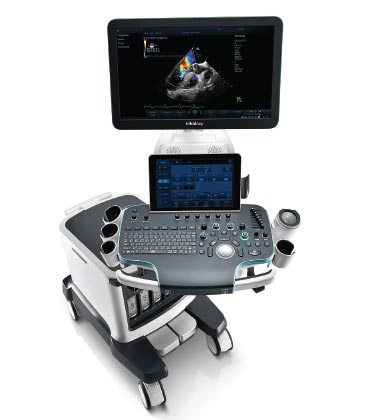
Butterfly Network is rewriting the rulebook for point-of-care diagnostics by making cutting-edge ultrasound technology accessible, affordable and efficient. It aids healthcare professionals worldwide with handheld, portable, cloud-connected ultrasound devices that offer crystal-clear imaging. Following a mission to democratize ultrasound and empower doctors, it delivers tools for hospitals and educational institutions to improve diagnosis, treatment and patient outcomes. Whether in emergency medicine, critical care, OB/GYN, or primary care, Butterfly’s probes provide precise, user-friendly imaging solutions. Compass, a device-agnostic ultrasound workflow solution, streamlines the integration of these devices within healthcare institutions. It ingests scans from Butterfly probes and existing ultrasound devices, ensuring seamless deployment. Key features include customizable worksheets, automated data transmission to EMR and PACS, and quality assurance and proficiency management tools. It also supports documentation, billing and governance. Analytics dashboards provide actionable insights to optimize point-of-care ultrasound (POCUS) programs. At the heart of Butterfly’s innovation are the flagship iQ3 and iQ+ ultrasound systems, redefining traditional medical imaging. iQ3, a third-generation probe, delivers twice the processing power of its predecessors. It offers superior image quality and unmatched diagnostic precision with full-body imaging capabilities, allowing clinicians to make rapid, informed decisions at the point of care. iQ+ probe, Butterfly’s second-generation model, provides a versatile, handheld solution for various specialties, including cardiology and obstetrics. It comes with several imaging modes, including B-Mode, M-Mode, Color Doppler, and Power Doppler. B-Mode (2-D) provides high-resolution, real-time imaging of anatomical structures. M-Mode offers detailed motion visualization within a single scan line, which is essential for assessing cardiac and fetal heart rates. Color Doppler visualizes blood flow by indicating velocity and direction, while Power Doppler highlights blood flow amplitude, showcasing areas of increased vascularity. Pulsed-Wave Doppler measures blood flow velocity at specific locations, aiding vascular assessments. Together, these features make the iQ+ system an essential tool across specialties. iQ+ Bladder automates bladder volume calculations in seconds, streamlining urological assessments. iQ+ Vet, a multi-species imaging solution for rapid, high-quality diagnostics in animals, extends this impact to veterinary medicine.
Medical Equipment Consulting Services

Successful healthcare infrastructure projects like hospitals, research facilities or specialist clinics require more than just the right equipment. What’s needed is a strategic partner who can align planning, design coordination, procurement and commissioning into a unified, accountable process. That’s where Pro Edge Engineering stands out. It collaborates with Government agencies, private developers, design-build teams and healthcare providers to deliver clinical spaces and medical equipment that are safe, efficient and sustainable—now and into the future. “As medical equipment planners, we believe integration starts at the earliest design stage because every element, from power requirements to structural loads, must support the complex needs of modern healthcare,” says Sim Meng Wei, director. Seamless Solutions for Complex Healthcare Needs At the heart of Pro Edge’s approach is early collaboration with government agencies, health operators, architects and engineers to integrate medical equipment requirements into structural systems, mechanical, electrical and plumbing infrastructure as well as information and communications technology networks. From radiation shielding to structural loading and power demands, all technical factors are addressed from the outset. This proactive planning helps eliminate costly variation orders—a key reason the government is moving away from conventional models toward design-build contracts, where contractors must deliver fully coordinated, no-variation outcomes. Pro Edge plays a critical role in helping these projects stay aligned and on track. Through detailed room-by-room and department-level planning, Pro Edge equips every space to meet its purpose, enabling smooth operations from day one. It follows a vendor-neutral, function-first philosophy that prioritizes clinical needs over brand preferences. Open technical specifications allow all qualified brands to tender competitively while complying with national and international standards. Pro Edge also addresses the challenge of ensuring equipment, software and information systems work together reliably. From HIS, LIS, CIS, RIS, DICOM etc., compliance for various medical equipment to standardized connectivity platforms, it helps client’s future-proof their technology infrastructure. “Everything we plan is centered on functionality and value. In APAC markets where budgets are often constrained, we focus on helping clients achieve the best outcomes for their investment”, says Kiran Pannu, senior consultant. Beyond planning, Pro Edge ensures smooth project delivery through comprehensive commissioning assistance and transparent oversight. Every technical and commercial decision is well-documented and auditable—a crucial advantage for government agencies and private developers seeking accountability and cost control.
Drug Delivery

Jumping on the Bandwagon of AI Transformation: How to Develop a Robust Governance Structure and Evaluation Framework
Dr. Alastair Mah, Vice President of Medical Affairs
Drug Delivery

Emerging Diagnostic Technologies in Healthcare
Winny Xie, Molecular Predictive & Diagnostic Lab Head, PT Prodia Widyahusada Tbk
Medical Device Engineering

Navigating the Pan-omic Era for Cancer Diagnostics - an Asian perspective
Dr. Jason Chan, Senior Consultant Medical Oncologist, National Cancer Centre Singapore
Medical Suppliers and Distributors

Optimizing Healthcare Procurement and Supply Chain Management
Cesar A. Roman, Director of Strategic Sourcing and Procurement Operations, University Health
Medical Devices and Equipment Manufacturing

AI and ESG in Managing Critical Care Patients
Esther May Cheam Sue San, Senior Nurse Manager, Thomson Hospital Kota Damansara
Medical Devices and Equipment Manufacturing

Drug Delivery in Interventional Nephrology
Dr. Christopher Leo, Chairman, Medicine Cluster, Raffles Medical Group
Medical Suppliers and Distributors

Pioneering A New Product Category in Medical Devices
Cecile Clavier, Marketing and Business Development Director, Hoya Vision Care [TYO: 7741]

IN MY OPINION
Medical Device Engineering
Biomedical Engineering/Clinical Engineering
Sojan Paul, Manager, Biomedical Engineering & Technology services, Western NSW Local Health District

LAST WORD
Medical Suppliers and Distributors
A Synopsis of Clinical Engineering/ Biomedical Engineering
Dr. Haniff Murray, Clinical Engineer/Alternate Manager/Researcher, Memorial Healthcare System
IN FOCUS
Design Evolution: Modernizing APAC Orthopedic Disposable Product Development
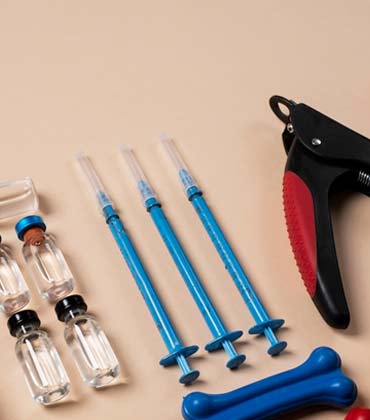
Technological innovation improves APAC orthopedic disposables through advanced materials, automated production, and enhanced safety systems that support reliable performance and stronger surgical outcomes.

Advancements in In Vitro Diagnostic Kits Transforming Healthcare in APAC
IVD kits are emerging as essential tools in improving patient outcomes and supporting efficient clinical decision-making in the region.
EDITORIAL
Enhancing Patient Care with Precision MedTech
Advancements in medtech typically come to life in operating rooms, where surgeons rely on cutting-edge tools and techniques to improve patient outcomes. These innovations are equally impactful in rehabilitation centers and neonatal units, where every decision and split-second action can shape the course of recovery.
As clinical needs become increasingly complex, the demand for advanced orthopedic solutions, efficient surgical products and intelligent patient support systems continue to rise. Leading orthopedic product development companies are answering the call with next-generation implants, joint systems and trauma solutions engineered for durability, precision and faster recovery. By leveraging biomechanics, 3D printing and advanced materials science, they are setting new benchmarks in orthopedic care and transforming outcomes across the continuum.
Complementing these developments are improvements in disposable orthopaedic surgical products. Sterile, single-use instruments and procedural kits are enhancing safety in the OR and significantly reducing infection risks. These solutions also streamline workflows, enabling surgical teams to perform faster, safer procedures—particularly in high-pressure orthopaedic and trauma units.
Beyond the surgical suite, medtech innovators are modernizing hospital infrastructure through clinical engineering, AI integration, and advanced monitoring systems. From upgrading neonatal incubators to replacing aging endoscope fleets, these efforts are raising the standard of critical care. AI-powered platforms are also emerging as key decision-support tools in intensive care units, offering predictive insights to aid timely and accurate interventions.
In this edition of MedTech Business Review APAC, we spotlight top companies in orthopedic product development, disposable surgical solutions and transformative medical technologies. These trailblazers are driving meaningful progress and improving care across the Asia-Pacific region.
We also feature expert perspectives on medtech in action. Sojan Paul, manager of biomedical engineering at Western NSW Local Health District, shares how strategic equipment upgrades and standardization strengthen care delivery in rural communities. Meanwhile, Esther May, senior nurse manager at Thomson Hospital Kota Damansara, reflects on the growing role of AI in ICUs while underscoring the enduring importance of human insight and empathy.
The Asia-Pacific region’s collaborative, technology-led momentum is propelling medtech innovation to new heights. We invite you to explore the insights and breakthroughs in this edition and uncover practical ways to make a meaningful difference in your medtech journey.
