


Thank you for Subscribing to Med Tech Business Review Weekly Brief
MedTech Business Review: Specials Magazine
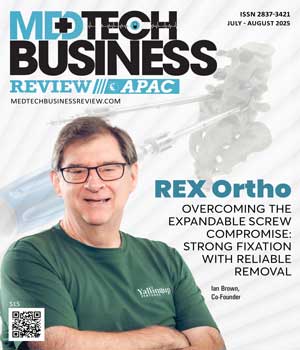
Orthopaedic fixation is a balancing act between strength and adaptability. Surgeons need implants that hold firm in fragile or compromised bone, but also recognize that the long-term clinical journey is unpredictable. Fractures can recur, infections develop or adjacent pathology emerge—sometimes years later—requiring the implant to be removed. For expandable screws, this has historically presented a challenge: while they improve fixation strength, their removability is often poor, with some designs risking bone ingrowth or mechanical failure on extraction. REX Ortho’s Removable and Expandable (REX) Screw changes that The REX Screw provides significantly improved fixation strength through an internal wing expansion mechanism that deploys within the cancellous bone—particularly effective in osteoporotic or unstable fractures. This expansion distributes load over a larger bone volume, reducing the risk of the screw pulling out of the bone under physiological loading. Yet critically, unlike other expandable screw technologies, the REX Screw has been engineered for controlled, clean removal. Its unique “gapless” design prevents bone ingrowth into the mechanism and the wings retract along the same axis they deploy, enabling low-torque, low-trauma extraction. This design decision was driven by direct surgeon input. While many expandable screws achieve better fixation, their poor removability has limited adoption—particularly in trauma cases where revision may be needed. REX Ortho understood that performance isn’t just about holding. It’s about preparing for what comes next. “We listened to what surgeons needed and designed our product around it. The REX Screw delivers robust fixation without locking surgeons into a permanent solution,” says Ian Brown, co-founder. “It expands when increased fixation strength is needed, but it can be removed cleanly if conditions change, offering confidence not just in the moment of fixation but also if revision is ever needed, aligning with real-world clinical needs. And because it fits into the existing procedure without adding time or requiring new training, it brings assurance without disruption.” That philosophy—make it strong, but make it simple—runs through everything REX Ortho brings to the table. It has developed a platform of implants based on the same removable-expandable core technology, each tailored to a different clinical challenge. The F-REX Screw is built for hip fractures, where poor bone quality can lead to screws penetrating through the hip joint under walking loads, requiring the patient to have a total hip replacement surgery. The L-REX Screw, used in lumbar spine fusion, offers the same expansion technology in spinal applications, where stability is critical to prevent pain. And it’s not just theory—testing shows REX’s expandable hip screws deliver around five times more gait cycles to failure than traditional screws. A three-month animal study showed that the screw’s expandable wings could be cleanly retracted even after bone growth—evidence that its removability holds up under realistic conditions.
Top Disposable Orthopedic Surgical Products Manufacturer in APAC 2025
Conventional wisdom says reusable orthopedic instruments are the economical choice. But in practice, the math rarely holds. Reusables come with a string of hidden costs—reprocessing, sterilization, maintenance, repairs and scheduling inefficiencies that ripple through the OR. Each instrument cycle adds risk, complexity and costly downtime. Kaiser Technology offers a smarter alternative. Its single-use orthopedic instruments arrive pre-sterilized with ethylene oxide (ETO), eliminating the reprocessing burden entirely. No backlogs, no last-minute failures—just ready-to-use tools that ensure surgical teams stay on schedule and operating rooms (OR) keep moving. By replacing unpredictable, behind-the-scenes costs with a fixed per-case pricing model, Kaiser helps hospitals sidestep capital investments in sterilization infrastructure while easing the workload on sterile processing departments. The impact is immediate: fewer delays, faster room turnover, more procedures completed per day and a lower total cost per case. “It’s not just a product shift. It’s a procedural upgrade. One that’s cost-effective and strategically aligned with what modern surgical centers need most: speed, reliability and the ability to do more with less,” says Kenny Wang, managing director. At the heart of it lies a clear objective—to simplify the surgical experience for surgeons through intuitive, ready-to-use designs. That starts with understanding the realities of the OR. Kaiser doesn’t design from the sidelines. It works closely with distributor partners in the UK and the U.S. to understand the surgeon’s requirements in high-stakes environments. What does a secure grip feel like in hour three? Where does strain show up during complex cases? Every answer becomes input for design. The result is a line of single-use instruments engineered with thoughtful ergonomics—carefully distributed weight, grip profiles that reduce wrist strain and tactile control that stays reliable from start to finish. This design respects the surgeon’s endurance and sharpens their precision.

Innovative Medical Solutions of the Year in APAC 2025

QuidelOrtho , a leader in diagnostic innovation, combines expertise in molecular testing, immunoassays, and clinical diagnostics to develop cutting-edge platforms like Savanna and Sofia. Savanna is a versatile molecular diagnostics platform that delivers rapid, multiplexed testing at the point of care, while Sofia is an advanced immunoassay system leveraging fluorescence technology for fast and reliable outcomes in infectious diseases, cardiac markers and women’s health. By providing rapid and accurate diagnostics, the company empowers healthcare providers to make timely, informed decisions that improve patient outcomes. QuidelOrtho was formed through the merger of Ortho Clinical Diagnostics and Quidel Corporation, combining Ortho’s legacy of pioneering blood safety advancements with Quidel’s expertise in rapid diagnostics. This strengthens the company’s ability to innovate, creating a comprehensive diagnostic ecosystem that spans high volume laboratory systems and nimble point-of-care tools. “Our commitment to excellence, inclusivity, and customer service drives transformative diagnostic innovations, improving healthcare accessibility and ultimately contributing to global health,” says Brian J. Blaser, president and CEO. Building on this commitment, QuidelOrtho is focusing on leadership and transformational strategies to drive innovation forward. By leveraging advanced technology and global expertise, the company is enhancing the performance and reach of its diagnostic solutions, ensuring that healthcare providers worldwide have the tools they need to deliver timely, life changing care. This dedication to innovation and rapid response was exemplified during the 20 APAC JULY - AUGUST 2025 Brian J. Blaser, President and CEO COVID-19 pandemic, a defining moment that tested the resilience and adaptability of healthcare systems worldwide. During the COVID-19 pandemic, within weeks, the company scaled up production of its Sofia SARS Antigen FIA test, a rapid fluorescence immunoassay designed for the qualitative detection of SARS-CoV-2 antigens, distributing millions of kits across 50 countries. This rapid response alleviated hospital burdens, improved outbreak tracking and highlighted the vital role of diagnostics in worldwide health security. While the pandemic emphasized the need for rapid testing, QuidelOrtho’s technologies extend beyond crisis response. The company has transformed women’s health, enabling early detection of conditions like preeclampsia and gestational diabetes. In emergency departments, cardiac biomarker tests speed up heart attack diagnoses, while laboratory systems support the long term management of chronic conditions like diabetes with unwavering accuracy.
Drug Delivery

Emerging Diagnostic Technologies in Healthcare
Winny Xie, Molecular Predictive & Diagnostic Lab Head, PT Prodia Widyahusada Tbk
Mobility Products

AI and Nurses in Critical Care:What is the future of Nursing?
Esther May Cheam Sue San, Senior Nurse Manager, Thomson Hospital Kota Damansara
Medical Device Engineering

Conceptual Evolution of 3d Printing In Orthopedic Surgery
Dr. Henry Soeharno, Orthopaedic Surgeon, Singapore General Hospital
Orthotics and Prosthetics (O&P)
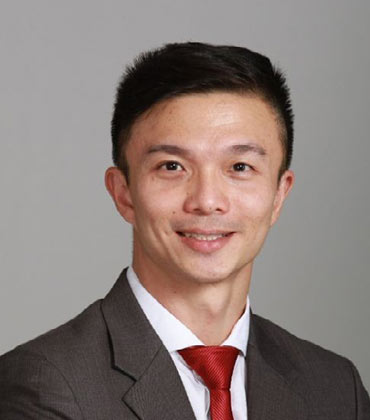
The Changing Landscape Of Orthopaedic Practice
Kelvin Tan, Visiting Senior Consultant, Tan Tock Seng Hospital
Medical Disposition

Solving The Complexities Of Telehealth Processes For Healthcare Workers
Natalie Yang, Senior Medical Staff Association Chair, Austin Health

IN MY OPINION
Medical Device Engineering
Biomedical Engineering/Clinical Engineering
Sojan Paul, Manager, Biomedical Engineering & Technology services, Western NSW Local Health District

LAST WORD
Medical Device Engineering
Navigating the Pan-omic Era for Cancer Diagnostics - an Asian perspective
Dr. Jason Chan, Senior Consultant Medical Oncologist, National Cancer Centre Singapore
IN FOCUS
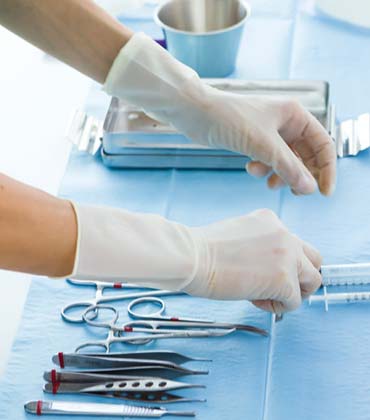
Streamlining Surgical Practices: The Rise of Single-Use Orthopedic Products in APAC
The rise of disposable orthopedic products enhances surgical hygiene and efficiency, addressing increasing demand while ensuring patient safety and adapting to evolving healthcare challenges.
Advancing Orthopaedic Technology: A Path Toward Personalized Solutions
The orthopedic sector is advancing with robotic surgeries and 3D-printed implants, improving patient outcomes. Despite challenges like regulatory hurdles and skill shortages, there are many opportunities for personalized solutions.
EDITORIAL
Enhancing Patient Care with Precision MedTech
Advancements in medtech typically come to life in operating rooms, where surgeons rely on cutting-edge tools and techniques to improve patient outcomes. These innovations are equally impactful in rehabilitation centers and neonatal units, where every decision and split-second action can shape the course of recovery.
As clinical needs become increasingly complex, the demand for advanced orthopedic solutions, efficient surgical products and intelligent patient support systems continue to rise. Leading orthopedic product development companies are answering the call with next-generation implants, joint systems and trauma solutions engineered for durability, precision and faster recovery. By leveraging biomechanics, 3D printing and advanced materials science, they are setting new benchmarks in orthopedic care and transforming outcomes across the continuum.
Complementing these developments are improvements in disposable orthopaedic surgical products. Sterile, single-use instruments and procedural kits are enhancing safety in the OR and significantly reducing infection risks. These solutions also streamline workflows, enabling surgical teams to perform faster, safer procedures—particularly in high-pressure orthopaedic and trauma units.
Beyond the surgical suite, medtech innovators are modernizing hospital infrastructure through clinical engineering, AI integration, and advanced monitoring systems. From upgrading neonatal incubators to replacing aging endoscope fleets, these efforts are raising the standard of critical care. AI-powered platforms are also emerging as key decision-support tools in intensive care units, offering predictive insights to aid timely and accurate interventions.
In this edition of MedTech Business Review APAC, we spotlight top companies in orthopedic product development, disposable surgical solutions and transformative medical technologies. These trailblazers are driving meaningful progress and improving care across the Asia-Pacific region.
We also feature expert perspectives on medtech in action. Sojan Paul, manager of biomedical engineering at Western NSW Local Health District, shares how strategic equipment upgrades and standardization strengthen care delivery in rural communities. Meanwhile, Esther May, senior nurse manager at Thomson Hospital Kota Damansara, reflects on the growing role of AI in ICUs while underscoring the enduring importance of human insight and empathy.
The Asia-Pacific region’s collaborative, technology-led momentum is propelling medtech innovation to new heights. We invite you to explore the insights and breakthroughs in this edition and uncover practical ways to make a meaningful difference in your medtech journey.
